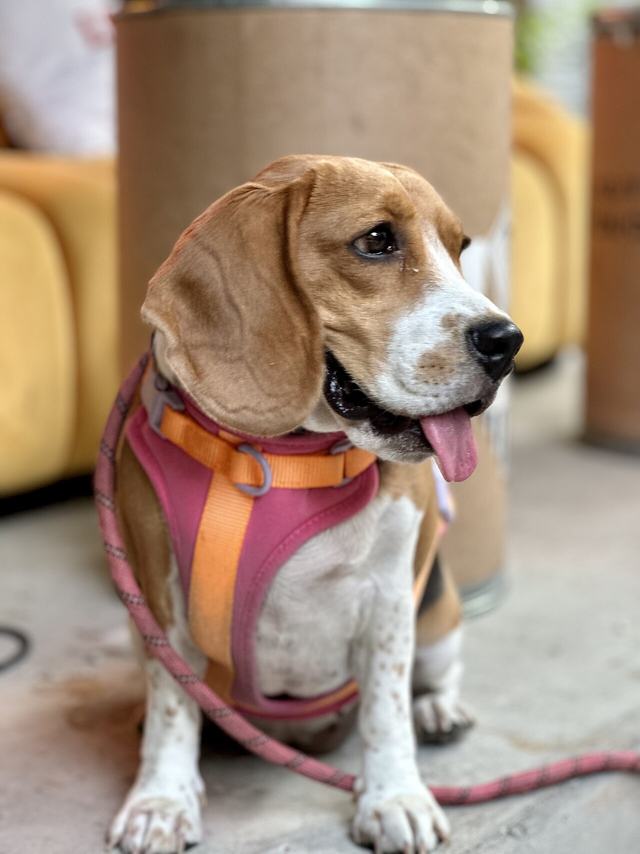
Read the equipment instructions first
Locate the sizing method, intended attachment points, adjustment directions, and warnings for the exact model. A similar-looking harness may fasten differently. Use the maker's measurements and verify the fitted result on the dog rather than relying only on a weight range.
Check the complete arrangement, including any collar, harness, lead, connector, and identification. Do not assume a marketing term guarantees escape prevention or solves pulling. If the dog has a health concern that affects equipment choice, ask your vet before relying on a particular pressure point or design.
Inspect wear before it becomes a failure
Examine webbing, stitching, buckles, clips, rings, and other loaded parts. Look for cracks, corrosion, fraying, loose seams, or a latch that does not close normally. Follow replacement guidance and stop using equipment whose condition you cannot trust.
Repeat the check after unusual strain, chewing, salt exposure, or a difficult wash cycle. Keep a suitable spare available, already adjusted or with clear fitting instructions. A spare that cannot be found or used correctly does not help much when the regular clip fails at departure time.
Fit calmly and observe movement
Put equipment on in a quiet setting and verify the manufacturer's fit instructions. Observe standing and ordinary movement. Look for twisting straps, interference with a normal stride, or a component that moves into an unintended position.
Practice short, manageable sessions if the dog is unfamiliar with wearing the item. Use positive reinforcement and do not force a prolonged struggle. Ask a qualified trainer or vet to assess uncertainty. Equipment choice and training work together; neither justifies ignoring distress or obvious discomfort.
Organize the doorway sequence
Choose where the lead, waste bags, water, and other needed supplies live. Have the adult responsible attach and check equipment before opening an exterior door. In busy households, a clear verbal handoff helps prevent two people from assuming the other has control.
Practise the same sequence without rushing. Check gates and shared building doors along the route. Keep children and visitors from unintentionally opening another exit during preparation. Highway Code rule 56 advises a short lead on pavements, roads and paths shared with cyclists or horse riders. Check signs and local restrictions at your destination.
Place a written departure checklist near the storage hook if several people share walks. Include the specific attachment arrangement, where waste bags are kept, and which doors must be secured. Rehearse the process with a new caregiver during a quiet time before assigning an independent outing.
Review the route and return
Choose an initial route with room to adjust distance from traffic, people, and other animals. Do not force greetings or approach unfamiliar dogs simply to socialize. Plan an easy way home if conditions or the dog's response make the walk unsuitable.
Afterward, note equipment movement, rubbing concerns, or handling difficulties. Clean and dry gear as directed before storage. If a setup repeatedly shifts or creates discomfort, solve that issue before the next long outing. A consistent check makes everyday walking easier to share with another trusted caregiver.
Keep it practical
Your checklist
- Use the exact model's sizing and attachment instructions.
- Inspect webbing, buckles, clips, rings, and stitching.
- Check fit during calm standing and ordinary movement.
- Keep a suitable spare and clear caregiver instructions.
- Attach and verify equipment before opening exterior doors.
- Adjust the route and seek help for persistent fit or handling concerns.
Sources & further reading
Sources offer further context; a link is not an endorsement of this publication. This guide is general information and does not replace care from a vet familiar with your animal.
See our editorial policy and commercial disclosure. Please tell us about an error.