Plan for each animal separately
List every animal, its normal diet, essential equipment, and any daily medication or special care. A dog, a rabbit, and a hamster cannot simply share one generic feeding pack. Decide who is responsible for collecting each animal and where the carriers, leads, or other appropriate handling equipment are kept.
Identify possible destinations and confirm their current animal policies directly. Include a backup if your first option is unavailable. Think through transport capacity with both people and pets aboard. A large supply box that leaves no room for a secured carrier is not a workable packing plan. Practice loading the essential equipment without rushing.
Put records where they stay readable
Keep copies of veterinary records, identification and ownership details, recent pet photographs, emergency contacts and care instructions in a waterproof container. Include microchip details where applicable and keep the database contact information current. Make a digital copy, but do not assume your phone will always have power or a signal.
Place an individual care sheet at the front for each animal. Use exact food and medication names rather than shorthand only your household understands. Add the regular clinic and an appropriate emergency option. Review the records after changes in medication, address, phone number, or veterinary care; an old document can be more confusing than an obviously missing one.
Give a trusted backup caregiver a way to find the current care instructions and contact list. Review access when phone numbers, household membership, or clinic details change. Keep a paper copy where it can be collected with the kit, while protecting unnecessary personal information. An electronic folder is useful, but the basic handover should still work if a phone battery is depleted.
Pack consumables with storage in mind
Discuss the amount of food, water and any prescribed medication to keep with your vet, taking storage life and the likely disruption into account. A portable departure bag and a larger supply at home serve different purposes. Label the quantities and expiry dates so a helper knows what is available and when it needs replacing.
Use waterproof storage while retaining food labels and batch information. Include appropriate bowls, feeding tools, waste supplies, and a manual can opener if needed. Record expiration dates and any temperature restrictions. A medication that needs special storage requires an explicit transport plan, not just a place on a checklist.
Choose equipment the animal can already use
Inspect carriers, closures, harnesses, and identification before storing the kit. Keep species-appropriate familiar bedding or comfort items when suitable. Introduce unfamiliar transport equipment gradually during ordinary life. An evacuation is a difficult moment to discover that a pet has never entered its carrier or that a closure is broken.
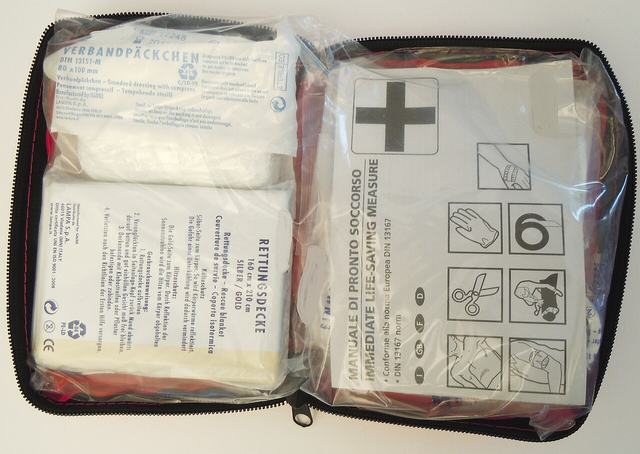
Ask your vet what belongs in a first-aid kit for your animals and how to use it. Keep instructions with the supplies. Do not add unprescribed human medication or assume a product suitable for one species can be used on another. Supplies support professional guidance; they do not turn an untrained caretaker into a clinician.
Rehearse and maintain the system
Choose a regular review date and also recheck after using any supplies. Rotate suitable food into ordinary use before replacement is needed, while maintaining the emergency reserve. Test that another responsible adult can locate the kit, identify each animal's supplies, and load the transport equipment. Record what slowed the rehearsal down and fix it. The best kit is the one that remains current and can leave the house with the animals.
Keep it practical
Your checklist
- Assign responsibility and confirm primary and backup destinations.
- Pack current records, photos, contacts, and individual care sheets.
- Plan food, water, medication, and required storage with the vet.
- Inspect and practice with transport equipment.
- Schedule reviews, rotate consumables, and rehearse loading.
Sources & further reading
- GOV.UK: consumer products — staying safe
- GOV.UK: accepting returns and giving refunds
- PDSA: looking after your pet
Sources offer further context; a link is not an endorsement of this publication. This guide is general information and does not replace care from a vet familiar with your animal.
See our editorial policy and commercial disclosure. Please tell us about an error.