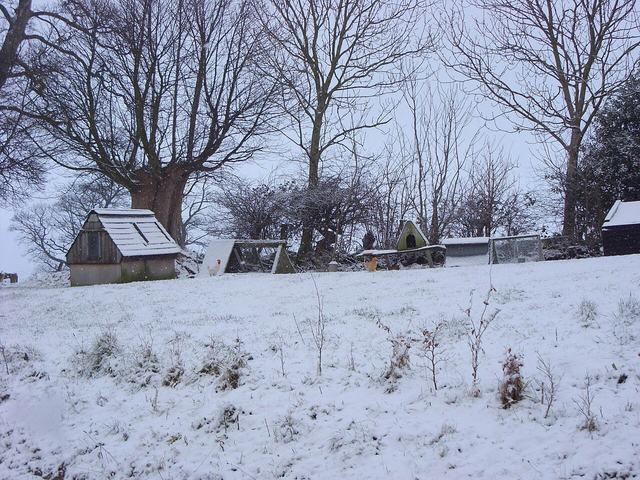
Inspect weather entry and airflow together
Walk around the empty service areas and look for damaged seams, loose panels, roof runoff, and openings altered since installation. Label designed ventilation separately from accidental gaps. Follow the maker's repair instructions rather than covering every opening with the same material.
Review any seasonal panel before fitting it. Ask which vents must remain open, how snow or debris will be cleared, and whether the panel changes door movement. Take photographs of the final setup so a substitute keeper knows what normal looks like. Keep last year's arrangement only if it still suits the current enclosure.
Plan for drinking water access
Write down how you will keep water available during freezing conditions and how often the arrangement needs checking. Discuss equipment choices with the manufacturer and an appropriate local adviser. Include a simple backup method that the keeper can carry out if the regular setup stops working.
If any electrical equipment is involved, use only equipment suitable for the application and arrange installation consistent with its instructions and applicable requirements. Check cord routing, physical protection, and access for maintenance. Do not improvise around water with damaged leads or undocumented heating devices.
Keep bedding work physically manageable
Look at where used bedding will go and how clean bedding reaches the coop. An easy summer path may become slippery or obstructed by snow. Prepare a storage and removal plan that still works when gates do not swing as freely or daylight is limited.
Inspect for damp areas during routine care and address their cause. Record whether moisture follows a water spill, weather event, or another change. Avoid covering a persistent problem with more material indefinitely. A maintenance log gives an adviser better information than a general statement that the coop feels wet.
Review feed and routine with an adviser
Keep an appropriate balanced diet available and ask your poultry vet or poultry welfare adviser about flock-specific winter questions. Avoid casually replacing the normal feeding plan with large quantities of treats because the weather has changed. Retain labels and written directions for anyone covering chores.
Schedule care visits around your actual workday and travel time. Confirm how evening closure will happen when sunset is earlier. Test the route with gloves and the lighting you will use. If a latch or water container is awkward now, cold fingers and poor weather will not make it easier.
Write an outage and absence plan
List the essential jobs that still happen if power fails, roads are difficult, or you cannot reach the coop at the usual time. Place spare equipment where another person can find it. Save veterinary and repair contacts in both the care folder and your phone.
Rehearse the plan before severe weather. Have the substitute explain how to check water, identify an incomplete closure, and report a concern. After the first difficult spell, revise the instructions based on what actually happened. Winter preparation is an ongoing care arrangement, not a single shopping trip in the fall.
Keep it practical
Your checklist
- Distinguish designed vents from damage that needs repair.
- Check seasonal covers against manufacturer instructions.
- Prepare a workable water and equipment-failure plan.
- Maintain a safe route for feeding and bedding removal.
- Review diet questions with a qualified local adviser.
- Rehearse earlier evening closure and backup care before severe weather.
Sources & further reading
Sources offer further context; a link is not an endorsement of this publication. This guide is general information and does not replace care from a vet familiar with your animal.
See our editorial policy and commercial disclosure. Please tell us about an error.