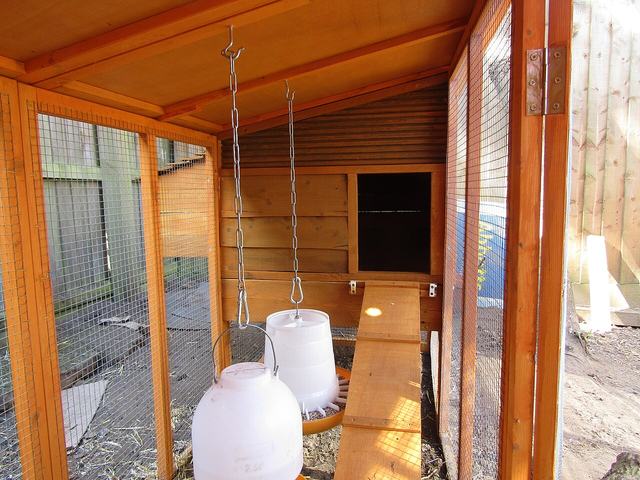
Map the intended air openings
Find each inlet, outlet, window, and adjustable panel in the manufacturer's documentation. Mark them on a sketch and compare the drawing with the installed coop. Note insect screens, protective mesh, nearby fences, and any covers that change the opening. Check for accumulated dust or debris according to the cleaning instructions.
Do not improvise by cutting structural panels or removing predator protection. First establish how the design is supposed to work. If documentation is unclear, send the maker photographs and ask which openings must remain available throughout the seasons. A clear answer is more useful than copying modifications from a different coop.
Track where dampness begins
Inspect bedding near water equipment, doors, roof edges, and the main sleeping area. Record the location of damp patches before removing them. A simple diagram with dates can distinguish a recurring spill from rain entering at a particular seam. Avoid assuming every wet area has the same cause.
Check outside as well. Look at roof runoff, ground drainage, and whether a path slopes toward an entrance. If dampness follows rainfall rather than water refilling, that difference matters. Keep observations factual: when it rained, where moisture appeared, and what changed since the previous dry inspection.
Review the water station separately
Observe one complete refill and cleaning cycle. Watch for splashing during handling, a container that sits unevenly, or a fitting that drips after replacement. Follow the waterer's setup directions and confirm that the birds can use it properly after any adjustment.
Photograph the station before making changes, then alter one feature at a time. If you replace the container and move it on the same day, you may not learn which change addressed the spill. Continue checking water access rather than treating a drier floor as the only measure of success.
Compare morning and evening conditions
Choose observation times that fit your normal routine and repeat them for several days. Note outside weather, bedding condition, visible condensation, and which panels are open. You do not need an elaborate monitoring system; consistent notes are more valuable than a collection of unrelated measurements.
Seasonal weather can change how an enclosure behaves. Cold-weather protection should be reviewed alongside continuing air exchange, not used as a reason to seal every opening. Get local advice when moisture persists or the design appears poorly suited to your site. Bird illness or abnormal breathing warrants veterinary attention rather than a ventilation experiment.
Make a small, documented correction
Prioritize straightforward maintenance that matches the original design: clearing an approved opening, repairing a leak, leveling a water station, or removing wet bedding. Record the date and inspect the same locations afterward. If several problems are urgent, fix them promptly and document them rather than delaying care to preserve an experiment.
Keep unresolved concerns in a message for the manufacturer or poultry welfare adviser with photographs and the observation log attached. State the flock size and housing arrangement. A useful request explains the problem and its timing; asking whether a coop has enough ventilation without context is much harder to answer.
Keep it practical
Your checklist
- Locate and label all designed ventilation openings.
- Record where dampness appears before cleaning it away.
- Inspect runoff and water equipment as separate possible causes.
- Compare observations at consistent daily times.
- Maintain air exchange when adding seasonal weather protection.
- Seek local design advice for persistent moisture and veterinary help for illness.
Sources & further reading
Sources offer further context; a link is not an endorsement of this publication. This guide is general information and does not replace care from a vet familiar with your animal.
See our editorial policy and commercial disclosure. Please tell us about an error.