Check the feeding position
Watch how your pet normally eats and drinks before replacing its equipment. Note whether a bowl shifts, tips, slides into a corner, or becomes difficult to reach. Check placement from the animal's level. A convenient location for a person may require the pet to lean across an obstacle or balance on an unsuitable surface.
Choose the size and height for the species and individual rather than assuming elevated, tilted, or deep bowls are always better. Medical conditions may change the appropriate feeding setup; ask the vet when that applies. Leave enough separation from litter or toilet areas to keep routine contamination down, while preserving easy access to water.
Inspect surfaces and removable parts
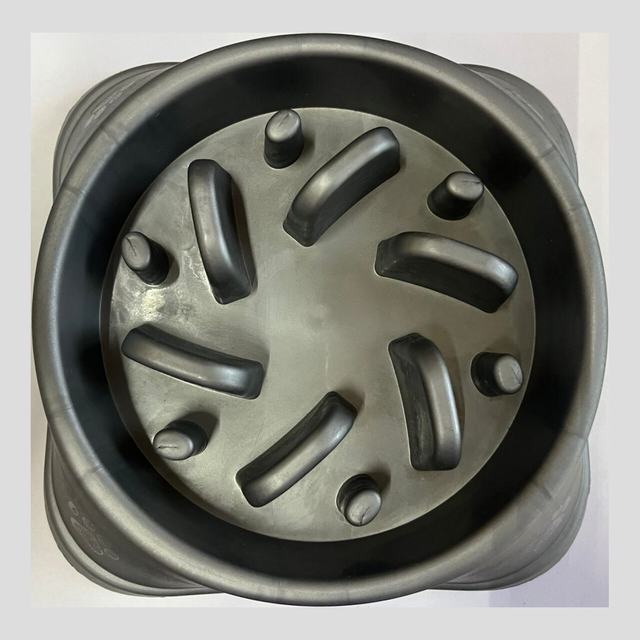
Look inside the bowl, beneath the rim, and around any rubber base or decorative attachment. Consider where food residue can lodge and whether you can reach it with a brush. Ask whether replacement seals or bases are available. An intricate puzzle or slow-feeding design needs a realistic washing plan for every groove.
Inspect for chips, cracks, sharp seams, worn coatings, and trapped residue during use. Remove damaged items that no longer provide a sound cleanable surface. Do not assume that a material name alone establishes quality or suitability. Read the manufacturer's intended use and care instructions for the actual model.
Build the schedule around what goes in it
Build bowl washing into the feeding routine. Wash food bowls after meals and clean water bowls daily, or sooner if soiled, using a method suitable for their material. Rinse well and follow any disinfectant directions. A refill is not a wash: plan emptying, cleaning and drying as ordinary care tasks.
Buy a spare set if it will help you maintain access while the used set is washed. Mark sets when animals have different diets. Keep a dedicated pet-food scoop rather than using the feeding bowl to reach into a storage bag. Include measuring utensils in the cleaning routine instead of treating them as permanently clean because they touch only dry food.
Match the bowl to the equipment you own
If you rely on a dishwasher, confirm that the item is labelled dishwasher-safe and check whether every removable part is included in that claim. See whether the bowl sits securely in the rack without trapping dirty water. A large bowl that technically fits but prevents the machine from operating normally may be inconvenient enough that washing gets postponed.
For hand washing, use the appropriate designated washing area and tools for the animal involved. Follow the item and cleaning-product instructions. Clean first when disinfection is required, and respect the stated contact time, rinsing, and drying directions. Keep animals away from wet cleaning products. Do not combine cleaners to create a stronger solution.
If multiple bowls look alike, identify the dedicated pet set on a storage rack or container. Keep a clean spare ready so washing does not leave the animal without its normal access to water. After changing equipment, confirm the replacement sits securely in the intended location and that every caregiver knows which parts need separating before cleaning.
Assign the final reset
Write down who returns clean bowls and checks water after the washing is done. Shared households can accidentally leave an animal without its usual bowl when each person assumes someone else replaced it. Check stability again after changing a mat or washing a nonslip base. A useful setup has no mystery parts, no persistent residue, and a clear path from dirty bowl to clean, accessible feeding station.
Keep it practical
Your checklist
- Check the animal's access and the bowl's stability.
- Inspect every rim, seal, groove, and base for cleanability.
- Plan wet-food washing after use and daily dry-food and water-bowl washing.
- Confirm dishwasher instructions or a suitable hand-washing method.
- Keep spare equipment and assign the final refill and replacement.
Sources & further reading
- GOV.UK: consumer products — staying safe
- GOV.UK: accepting returns and giving refunds
- PDSA: looking after your pet
Sources offer further context; a link is not an endorsement of this publication. This guide is general information and does not replace care from a vet familiar with your animal.
See our editorial policy and commercial disclosure. Please tell us about an error.