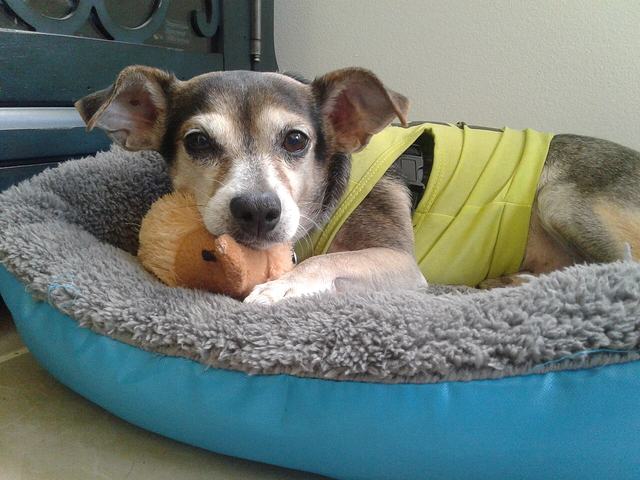
Observe resting choices before deciding
Note where the dog settles at several times of day, along with light, temperature, nearby people, and noise. A dog may choose company at one time and distance at another. Consider offering more than one suitable option rather than expecting a single decorative bed to fit every situation.
Record what you actually see. New restlessness, difficulty lying down, or a sudden change in preferred location can merit veterinary advice. Do not explain every change as dislike of the bed, and avoid buying successive products while a possible health concern remains unaddressed.
Check the route as carefully as the bed
Place the resting area where doors, chairs, and household traffic do not repeatedly intrude. Leave enough room for the dog to approach, turn, stretch, and leave. Keep the area clear of cables, unstable furniture, and supplies that may be moved into the dog's path later.
Consider stairs and floor surfaces for the individual dog. If a step or ramp is proposed, assess the whole route, product stability, and the dog's response. Ask a vet for guidance on mobility needs. A special label on a bed does not by itself establish that it addresses a medical problem.
Choose materials you can maintain
Read the manufacturer's dimensions, filling description, cleaning directions, and replacement options. Check whether covers can actually be removed with the space and tools available. A washable product is useful only if its cleaning requirements fit your household equipment and routine.
Consider the dog's observed chewing behaviour when deciding what can be left accessible. Inspect seams, zippers, and loose parts. If a dog removes filling or damages the surface, stop access to the damaged item and choose a suitable alternative. No general material description guarantees suitability for every dog.
Check whether a replacement cover is available before buying if washing is central to your plan. Measure the space with the cover removed and reinstalled, and keep laundering instructions accessible to helpers. Maintenance should not leave the dog without a suitable resting option.
Set household rules around rest
Explain that a resting dog should be allowed space and that adults supervise interactions with children. Do not make the bed the place where visitors repeatedly crowd or handle the dog. Provide a calm alternative when household activity rises.
In a multi-pet home, watch whether each animal can reach and leave its resting option comfortably. A second bed directly beside the first may not resolve competition over a particular route or position. Observe use and seek qualified guidance if tension persists rather than forcing animals to settle together.
Review the arrangement after real use
Give the setup a fair observation period, then note what works: location, access, cleaning, and the dog's voluntary use. Change a specific problem rather than moving everything at once. Keep a familiar acceptable option available when practical during the adjustment.
Write down care instructions for a sitter, including cover washing and any place the dog prefers to be undisturbed. Reassess after a move, a new pet, or a change in mobility. The successful resting area is one the dog can use comfortably and the household can maintain consistently.
Keep it practical
Your checklist
- Observe daily resting preferences and meaningful changes.
- Keep approach, stretching room, and exit routes clear.
- Check cleaning instructions before selecting a bed.
- Inspect damaged filling, fasteners, and seams promptly.
- Give resting dogs space and supervise children.
- Reassess access and comfort as the dog's needs change.
Sources & further reading
Sources offer further context; a link is not an endorsement of this publication. This guide is general information and does not replace care from a vet familiar with your animal.
See our editorial policy and commercial disclosure. Please tell us about an error.